One minute, everything felt normal. Next, there was another sickle cell crisis. Another rush to the hospital. Another bill is waiting at the end of it.
For many people living with sickle cell, this is routine. It happens without warning. It demands immediate care. Yet, access to that care is not always guaranteed.
In those moments, the question is not whether treatment is needed. It is whether it can be afforded.
For Aghogho, this reality was not distant. It was personal. She had seen a close friend go through repeated crises. Each time, the recovery became harder. Over time, the complications worsened. Eventually, it affected her mobility.
That experience stayed with her.
It shifted how she saw healthcare. It also raised questions she could not ignore. Why were people living with a lifelong condition left to navigate care this way? Why did access depend so heavily on out-of-pocket payments?
This is often where youth advocacy begins. Not from theory, but from lived experience.
When Experience Turns Into Youth Advocacy

Experiences like this do not always lead to action. However, in some cases, they become a starting point.
For Aghogho, it became a turning point.
She began to pay closer attention. Not just to her friend’s experience, but to others around her. The pattern was clear. Frequent hospital visits. High costs. Limited support from structured systems.
At first, it felt like a problem too large to solve. However, through exposure and learning, that perspective began to change.
Her journey into youth advocacy became more defined when she joined the WeNaija Impact Cohort, an NSSF initiative focused on empowering young people to drive community change.
Through the program, she gained a clearer understanding of how systems work. More importantly, she began to see where they fall short and where intervention is possible.
This is what effective youth advocacy does. It connects personal experience to structured action.
Understanding the Gap: Why Sickle Cell Patients Are Often Left Out
Before building any solution, the problem had to be understood clearly. What Aghogho observed was not isolated. It reflected a broader issue within the healthcare system.
Sickle cell patients require continuous and often urgent care. However, the systems meant to support healthcare access are not always designed for that level of need.
A System That Does Not Reflect Reality
Most health insurance models are built around occasional use. They assume that people will visit hospitals only occasionally, not repeatedly.
However, sickle cell does not follow that pattern.
Patients experience recurring crises. They require ongoing monitoring and treatment. This creates a mismatch between system design and real-life needs.
As a result, many patients rely heavily on out-of-pocket payments. Each visit becomes a financial decision.
This is where youth advocacy becomes critical. It draws attention to often-overlooked gaps and pushes for solutions that reflect lived realities.
The Financial and Emotional Burden
The burden is not only financial. It also affects how people make decisions about their health.
Many patients delay treatment because they cannot afford it immediately. Others try to manage symptoms on their own.
Over time, this leads to complications. It also creates stress for both patients and their families.
Through youth advocacy, these experiences are not ignored. Instead, they become the foundation for action.
From Training to Action: How NSSF Strengthens Youth Advocacy

Recognising a problem is one step. Acting on it requires support, structure, and resources.
This is where NSSF plays a key role. Through the WeNaija Impact Cohort, young people are equipped to turn ideas into real interventions.
Building Capacity Through the WeNaija Impact Cohort
The cohort provides training that helps participants understand community systems. It also offers mentorship and funding support.
This ensures that youth advocacy moves beyond discussion. It becomes action-driven.
Participants are guided to identify real problems and design solutions that can be implemented within their communities.
Turning Insight Into Intervention
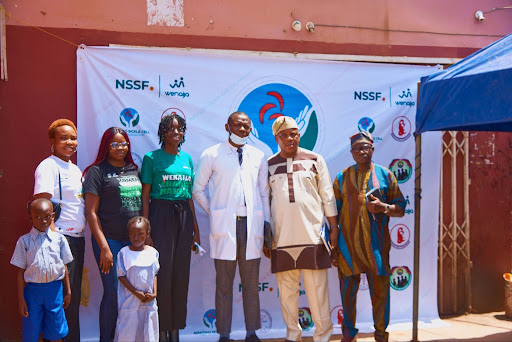
For Aghogho, the program became a bridge between experience and execution.
She had seen the problem firsthand. Now, she had the tools to respond to it.
This is a key strength of youth advocacy when properly supported. It turns lived experiences into structured, practical solutions.
With a clearer understanding of the problem and the right support system, Aghogho moved into action.
This phase reflects what youth advocacy looks like in practice, focused, strategic, and impact-driven.
Designing a Practical Solution
Aghogho partnered with the Osun State Health Insurance Agency to create access within an existing system.
Instead of building something entirely new, she focused on improving access to what already existed. This made the solution more realistic and easier to implement.
Through this partnership, 50 individuals living with sickle cell disease were enrolled in a health insurance plan. Each beneficiary received coverage for one year.
This outcome shows how youth advocacy can lead to tangible, measurable results.
Implementing the Intervention
Implementation required coordination. Beneficiaries had to be identified, enrolled, and supported through the process.
Clear communication was essential. Systems had to align. Timelines had to be managed.
Despite these challenges, the intervention was successfully executed.
This highlights that youth advocacy, when supported by the right structures, can handle complex, real-world challenges.
The Impact: What Changed for Sickle Cell Warriors
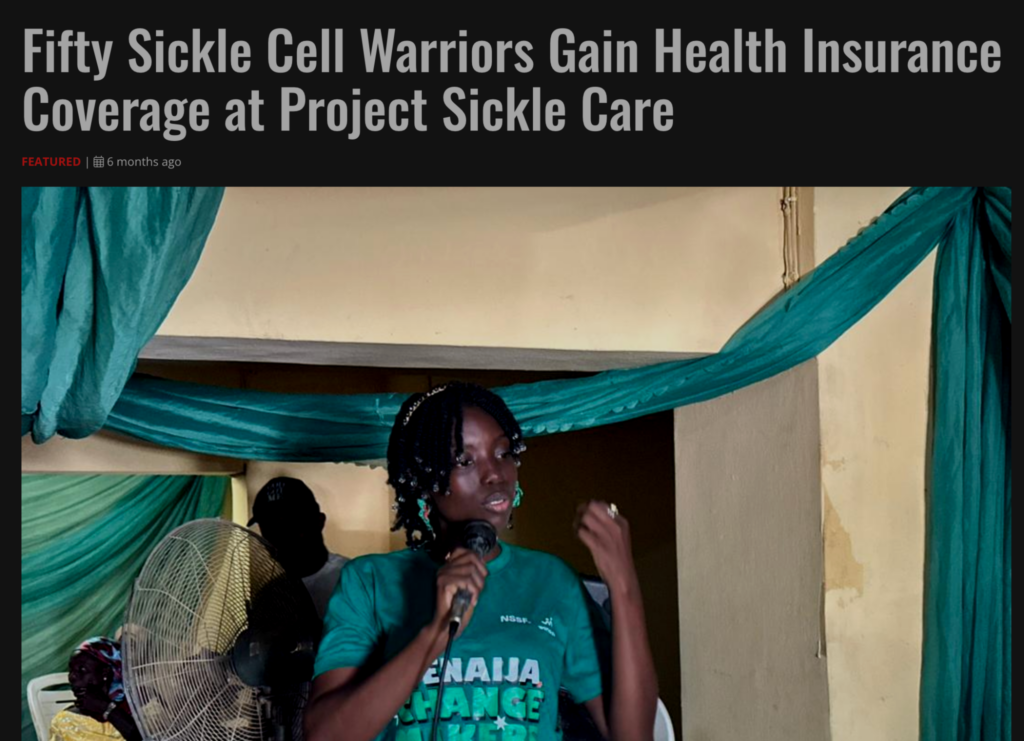
The real value of this intervention lies in its impact. It changed not just access, but also how beneficiaries approached their health.
Improved Access to Care
Beneficiaries were able to access healthcare more easily. They no longer depended entirely on out-of-pocket payments.
This reduced delays in seeking treatment and improved consistency in care.
Reduced Financial Pressure
Frequent hospital visits often come with high costs. With insurance coverage, beneficiaries experienced less financial strain.
This allowed them to focus more on managing their health and less on immediate expenses.
Strengthening the Value of Youth Advocacy
This intervention reinforced the effectiveness of youth advocacy. It showed that young people can design and implement solutions that directly improve lives.
It also strengthened trust in youth-led initiatives within the community.
Why Youth Advocacy Matters for Community Development
This case study reflects a broader opportunity. When young people are empowered, they can contribute meaningfully to community development.
Youth Advocacy Creates Relevant Solutions
Young people understand their communities. They experience the same challenges and see the same gaps.
As a result, their solutions are practical and relevant. This makes youth advocacy highly effective.
Bridging Gaps Within Existing Systems
Not every solution requires a new system. Sometimes, the focus should be on improving access within what already exists.
This is a key strength of youth advocacy. It identifies opportunities within current systems and uses them effectively.
Scaling the Impact of Youth Advocacy Through WeNaija
While this case highlights one intervention, the potential for scale is significant.
Expanding support for young leaders can lead to broader impact across multiple communities.
Expanding Opportunities for Young Leaders
Programs like the WeNaija Impact Cohort can be scaled to reach more participants.
This will enable more youth-led interventions and strengthen youth advocacy across Nigeria.
Building Sustainable Partnerships
Collaboration will be essential for long-term impact. Partnerships with health agencies and community organisations can help sustain and expand these efforts.
Through continued support, youth advocacy can move from isolated success stories to broader system change.
Conclusion: Youth Advocacy as a Catalyst for Change
Youth advocacy is no longer just about awareness. It is about action and impact.
Through the WeNaija Impact Cohort, NSSF is enabling young people to take ownership of community challenges and deliver real solutions.
Agogo’s story shows what is possible when lived experience meets opportunity. Her intervention improved access to healthcare for 50 individuals living with sickle cell.
More importantly, it demonstrated that youth advocacy can drive meaningful, lasting change.
Frequently Asked Questions (FAQs)
What is youth advocacy?
Youth advocacy is when young people take action to solve community problems and influence systems that affect their lives.
Why is youth advocacy important in Nigeria?
Youth advocacy is important because young people understand local challenges and can create practical, community-driven solutions.
How does youth advocacy improve healthcare access?
Youth advocacy improves healthcare access by identifying gaps and creating solutions that make care more accessible and affordable.
What is the WeNaija Impact Cohort by NSSF?
It is a program that equips young people with training, funding, and mentorship to implement community-based solutions.
How did youth advocacy help sickle cell patients in this case?
It helped provide health insurance coverage for 50 patients, improving access to care and reducing financial burden.