Health literacy plays a critical role in determining whether people can access, understand, and use healthcare effectively. Yet, despite its importance, it remains one of the most overlooked barriers to better health outcomes in Nigeria.
Every day, Nigerians make decisions about their health. They decide when to visit a hospital, whether to take medication, where to seek information, and how to respond to symptoms. However, making the right decision depends on having the right information and understanding what that information means.
When health literacy is low, people are more likely to delay treatment, misuse medication, rely on misinformation, or avoid preventive healthcare services altogether. As a result, conditions that could have been prevented or managed early often become more severe and expensive to treat.
Understanding Health Literacy in Nigeria
Before exploring the impact of low health literacy, it is important to understand what the term actually means. While many people associate health literacy with education or the ability to read, the concept is much broader.
Health literacy influences how people interpret health information, navigate healthcare systems, and make decisions about their well-being. Consequently, it affects nearly every interaction a person has with the healthcare system.
What Is Health Literacy?
Health literacy refers to a person’s ability to find, understand, evaluate, and use health information to make informed decisions about their health.
In simple terms, it is the ability to understand information well enough to take the right action.
For example, a person with strong health literacy can understand a prescription, follow a treatment plan, recognise when symptoms require medical attention, and identify reliable sources of health information.
By contrast, someone with low health literacy may struggle to understand medical instructions, misinterpret health messages, or rely on inaccurate information when making healthcare decisions.
Why Health Literacy Matters for Better Health Outcomes
Strong health literacy leads to better health outcomes because it empowers people to take an active role in managing their health.
People who understand health information are more likely to seek care early, follow treatment instructions, participate in preventive health services, and adopt healthier behaviours. They are also better equipped to ask questions, communicate with healthcare providers, and make informed decisions.
In contrast, low health literacy often creates barriers at every stage of the healthcare journey. It can prevent people from accessing care, understanding diagnoses, following treatment plans, and recognising the importance of prevention.
Furthermore, low health literacy increases healthcare costs. When people delay treatment or misuse medications, illnesses become more difficult and expensive to manage. This places additional pressure on families and healthcare systems.
Therefore, improving health literacy is not simply about sharing information. It is about ensuring that people have the knowledge, confidence, and skills needed to use that information effectively.
The Growing Health Literacy Challenge in Nigeria
Although access to health information has improved over the years, understanding and applying that information remains a significant challenge for many Nigerians. Today, health messages are everywhere. People receive information through television, radio, newspapers, social media, healthcare providers, community leaders, and even messaging platforms like WhatsApp.
However, access to information does not automatically lead to understanding. In many cases, people are exposed to large amounts of health information but struggle to determine what is accurate, relevant, and trustworthy.
As a result, low health literacy continues to affect healthcare decisions across different age groups, income levels, and communities. While the causes vary, they often intersect and reinforce one another.
Limited Access to Reliable Health Information
For many Nigerians, finding reliable health information is not always easy.
Healthcare professionals remain one of the most trusted sources of health information. However, access to doctors, nurses, and other healthcare providers can be limited, particularly in underserved and rural communities.
Consequently, people often turn to alternative sources for guidance. These may include friends, family members, traditional healers, social media influencers, or informal medicine vendors.
For example, someone experiencing malaria symptoms may receive treatment recommendations from a neighbour rather than a healthcare professional. Similarly, a young person seeking information about sexual and reproductive health may rely on social media posts instead of verified health resources.
The Rise of Health Misinformation
One of the biggest threats to health literacy in Nigeria today is misinformation.
The rapid growth of digital technology has made information more accessible than ever before. At the same time, it has made misinformation easier to spread.
A single inaccurate message shared on social media can reach thousands of people within hours. Unfortunately, false information often spreads faster than verified information because it is designed to trigger strong emotional reactions.
This challenge became particularly visible during the COVID-19 pandemic. Across the country, misleading claims about prevention methods, treatments, and vaccines circulated widely. Many people struggled to distinguish credible information from rumours.
However, the problem extends beyond pandemics.
Misinformation continues to influence conversations around vaccination, family planning, mental health, nutrition, sexual and reproductive health, and disease prevention.
For instance, myths about contraceptives continue to discourage some young people from seeking accurate reproductive health information. Similarly, misconceptions about vaccines still contribute to vaccine hesitancy in some communities.
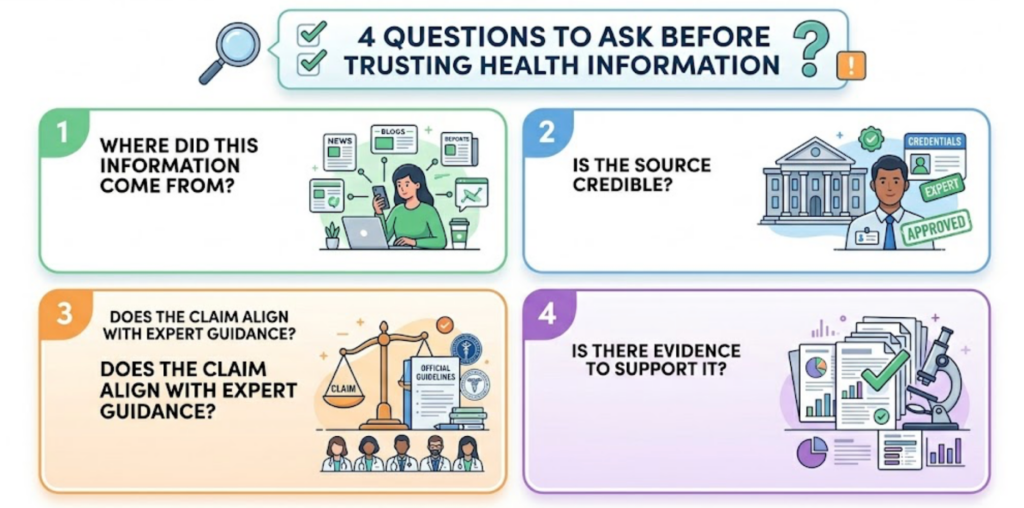
Health literacy helps people ask important questions:
- Where did this information come from?
- Is the source credible?
- Does the claim align with expert guidance?
- Is there evidence to support it?
Without these skills, misinformation can easily influence healthcare decisions.
Language, Education, and Digital Gaps
Nigeria’s diversity presents both opportunities and challenges for health communication.
With hundreds of languages spoken across the country, communicating health information effectively requires more than simply translating materials. Messages must also be culturally relevant and easy to understand.
Unfortunately, many health campaigns are developed primarily in English. While this may reach some audiences, it often excludes others who are more comfortable communicating in local languages.
As a result, critical health information may not reach the people who need it most.
Education also plays a role.
Although literacy rates have improved over time, educational inequalities remain significant across different regions and communities. People with limited formal education may struggle to understand written health materials, medical instructions, or complex public health messages.
However, education alone does not determine health literacy.
Even highly educated individuals can struggle to navigate healthcare systems or interpret medical information when communication is unclear.
Digital access creates another layer of complexity.
Nigeria has experienced rapid growth in internet and smartphone usage. Young people, in particular, consume large amounts of information online. While this creates opportunities for health education, it also increases exposure to misinformation.
Furthermore, not everyone possesses the digital literacy skills needed to verify online information. Many users rely on headlines, forwarded messages, or viral posts without checking their accuracy.
Consequently, health literacy and digital literacy are becoming increasingly connected.
To improve health outcomes, both must be strengthened together.
How Low Health Literacy Affects Healthcare in Nigeria
The consequences of low health literacy extend far beyond misunderstanding health information. In reality, they influence how people interact with healthcare systems, respond to illness, and manage their health over time.
When people struggle to understand health information, the effects are evident in hospitals, clinics, communities, and households across the country.
The impact of low health literacy can be observed across several areas of healthcare.
Delayed Care and Late Diagnosis
One of the most common consequences of low health literacy is delayed healthcare seeking.
Many people fail to recognise the early warning signs of illness. Others underestimate symptoms or believe they will resolve on their own.
As a result, individuals often wait until a condition becomes severe before seeking professional care.
This delay can have serious consequences.
For example, conditions such as hypertension and diabetes often develop gradually. In many cases, symptoms may be mild or absent during the early stages. Without adequate health literacy, people may not understand the importance of regular screening and early detection.
The same pattern can be seen in maternal health. Pregnant women who do not understand the importance of antenatal care may delay or completely avoid healthcare visits. This increases risks for both mother and child.
Similarly, individuals experiencing symptoms of tuberculosis, cervical cancer, or other chronic conditions may postpone seeking treatment because they do not recognise the seriousness of their symptoms.
In each case, delayed care leads to worse health outcomes and higher treatment costs.
Self-Medication and Unsafe Treatment Practices
Self-medication remains a widespread practice in Nigeria.
Many people purchase medicines without prescriptions or rely on recommendations from friends, family members, or informal providers.
In some situations, individuals use antibiotics for viral infections. Others repeatedly treat symptoms without seeking a proper diagnosis.
These decisions are often influenced by low health literacy.
The challenge is particularly visible in malaria treatment. Because malaria is common, many people assume every fever is malaria and begin treatment without testing.
However, not all fevers are caused by malaria. Self-diagnosis can delay proper treatment for other serious conditions.
Why Health Literacy Is a Public Health Priority
Health literacy is often viewed as an individual issue. However, its impact extends far beyond personal health decisions. When large numbers of people struggle to access and understand health information, the consequences become a public health concern.
This is because health literacy influences how communities respond to disease outbreaks, preventive health programs, treatment recommendations, and public health interventions. It also affects whether people trust healthcare systems and engage with available services.
How NSSF Is Helping Improve Health Literacy Among Young Nigerians

Improving health literacy requires more than public health campaigns and awareness messages. It requires sustained engagement, trusted messengers, and community-driven solutions.
This is particularly important when working with young people.
Young people are not only consumers of health information. They are also creators, influencers, advocates, and community leaders. As a result, they have the potential to shape how health information is shared and understood within their communities.
Recognising this opportunity, NSSF has invested in programmes that equip young people with the knowledge, skills, and platforms needed to improve health outcomes.
Through youth-led advocacy, storytelling, capacity building, and community engagement, NSSF is helping address some of the barriers that contribute to low health literacy across Nigeria.
Using Youth Advocacy to Improve Health Literacy
One of the most effective ways to improve health literacy is through trusted voices.
People are more likely to engage with health information when it comes from individuals they trust and relate to.
This is why youth advocacy is such a powerful tool.
Through its programs, NSSF supports young advocates to become credible sources of health information within their communities.
These advocates help simplify complex health topics, challenge misinformation, and encourage healthier behaviours.
More importantly, they make health information feel accessible.
Creating Safe Spaces for Health Conversations
Health literacy thrives in environments where people feel comfortable asking questions.
Unfortunately, many health issues remain surrounded by stigma, fear, and misinformation.
This can discourage people from seeking information or discussing their concerns openly.
To address this challenge, NSSF creates opportunities for dialogue through workshops, campaigns, youth engagement activities, and community events.
Why Young People Are Critical to Improving Health Literacy
Improving health literacy in Nigeria requires a long-term approach. While governments, healthcare providers, and development organisations all have important roles to play, young people remain one of the most valuable resources for driving change.
Nigeria has one of the largest youth populations in the world. This presents both a challenge and an opportunity. Young people are often among the most affected by misinformation, but they are also among the most influential voices within their communities.
As technology continues to shape how information is shared and consumed, young people are uniquely positioned to improve health literacy at scale.
By creating accurate, engaging, and relatable content, youth advocates can help improve health literacy across digital spaces. They can also use their platforms to amplify credible information and encourage evidence-based decision-making.
What More Needs to Be Done to Improve Health Literacy in Nigeria
Although progress is being made, significant challenges remain.
Improving health literacy requires more than occasional awareness campaigns. It requires sustained investment, collaboration, and innovation.
Government agencies, healthcare providers, educational institutions, civil society organisations, and community leaders all have a role to play.
Most importantly, efforts must be designed to meet people where they are and respond to their realities.
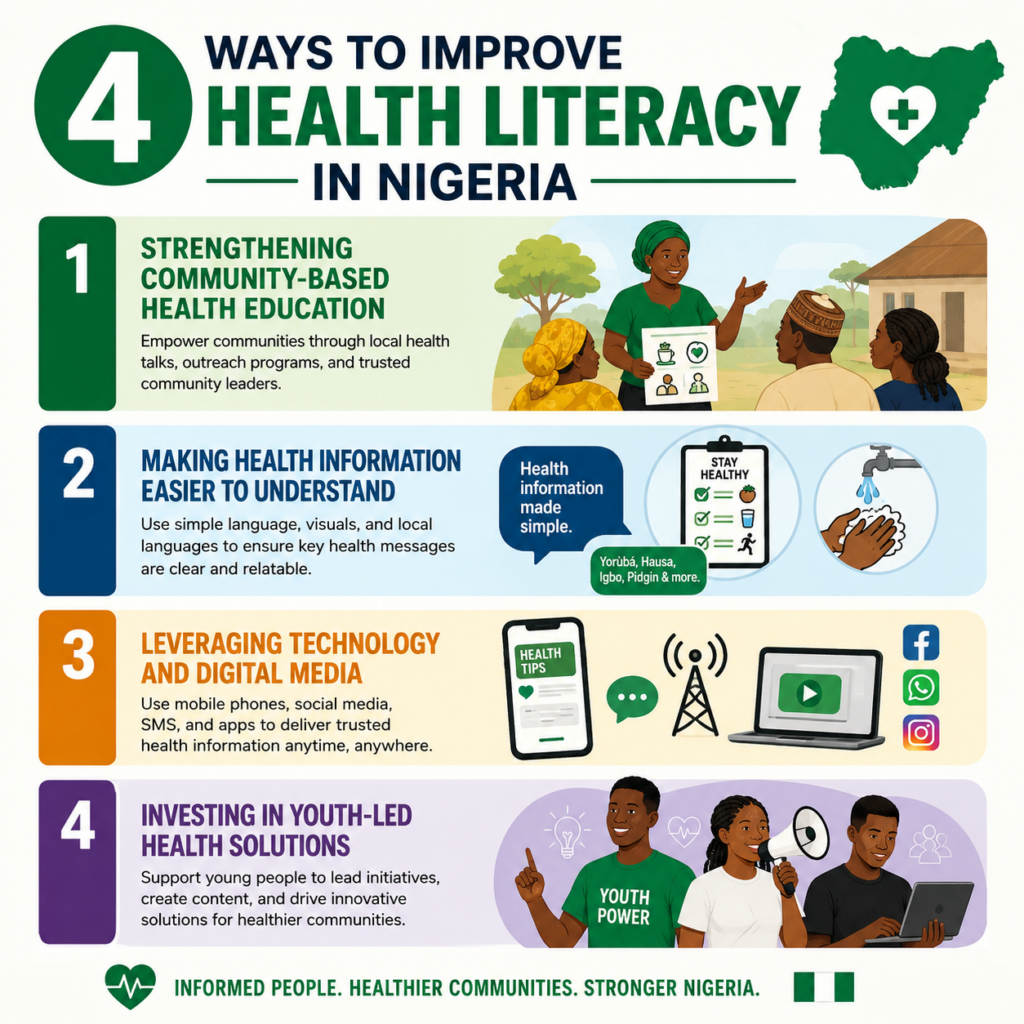
Strengthening Community-Based Health Education
Health information is most effective when it is accessible and relevant.
Community-based education programs can help bridge information gaps by delivering health messages in familiar environments and local languages.
These programs also allow communities to ask questions, clarify misconceptions, and engage directly with trusted sources of information.
In addition, community-based approaches help ensure that health literacy efforts reach people who may have limited access to digital resources or formal healthcare services.
As a result, they remain one of the most effective strategies for improving health literacy at the grassroots level.
Making Health Information Easier to Understand
Health communication should be designed with the audience in mind.
Too often, health messages are filled with technical terms and complex explanations that can be difficult for people to understand.
To improve health literacy, information must be clear, concise, and practical.
This means using simple language, visual aids, storytelling, and culturally relevant examples.
It also means translating health information into local languages and adapting messages for different audiences.
Leveraging Technology and Digital Media
Technology offers enormous opportunities to improve health literacy.
Digital tools can help deliver health information quickly, efficiently, and at scale.
However, technology alone is not enough.
Digital literacy must grow alongside health literacy. People need the skills to evaluate information critically and distinguish credible sources from misinformation.
Therefore, investments in digital health education should remain a priority.
Investing in Youth-Led Health Solutions
Young people are already leading innovative solutions across Nigeria.
From community awareness campaigns to health advocacy initiatives, youth-led programs are helping address some of the country’s most pressing health challenges.
Investing in these efforts can significantly improve health literacy outcomes.
Conclusion
Health literacy is one of the most important factors influencing healthcare access, health outcomes, and overall well-being. Yet, it remains one of the most overlooked barriers to healthcare in Nigeria.
When people cannot access, understand, or use health information effectively, they are more likely to delay treatment, misuse medication, fall victim to misinformation, and miss opportunities for prevention.
The consequences extend beyond individuals. They affect families, communities, healthcare systems, and national development.
Improving health literacy, therefore, requires a collective effort.
As Nigeria continues to address complex health challenges, improving health literacy may be one of the most powerful investments the country can make.
Frequently Asked Questions (FAQs)
What is health literacy?
Health literacy is the ability to find, understand, evaluate, and use health information to make informed decisions about health and healthcare.
Why is health literacy important?
Health literacy helps people make better healthcare decisions, follow treatment plans, access services, prevent disease, and improve overall health outcomes.
How does low health literacy affect healthcare in Nigeria?
Low health literacy can lead to delayed treatment, self-medication, poor medication adherence, low uptake of preventive services, and increased vulnerability to health misinformation.
How can health literacy be improved in Nigeria?
Health literacy can be improved through community education, clear health communication, digital health campaigns, youth engagement, and increased access to reliable health information.